
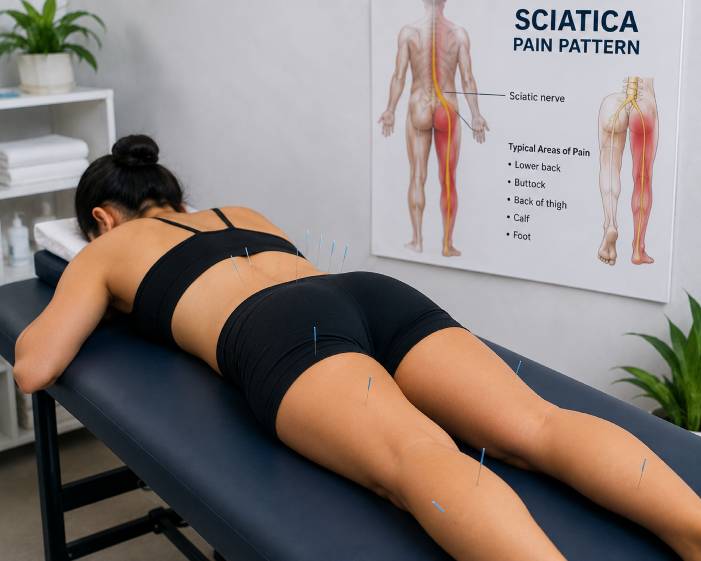
What is Sciatica?
Sciatica is a condition caused by irritation or compression of the sciatic nerve — the largest nerve in the body. The sciatic nerve travels from the lower back through the buttocks and down each leg.
Sciatica commonly causes pain that radiates from the lower back into the leg and can vary from mild discomfort to severe pain affecting daily activities.
Common Symptoms of Sciatica
Symptoms may include:
- Lower back pain
- Pain radiating into the buttock, thigh, calf, or foot
- Burning or sharp shooting pain
- Tingling or pins and needles
- Numbness in the leg or foot
- Muscle weakness
- Pain that worsens with sitting, bending, or coughing
Causes of Sciatica
Sciatica may develop due to:
- Disc bulge or slipped disc
- Spinal joint irritation
- Degenerative changes in the spine
- Muscle tightness or spasm
- Poor posture
- Prolonged sitting
- Spinal stenosis
- Pregnancy-related pelvic or back changes
A proper physiotherapy assessment can help identify the underlying cause of symptoms.
How Can Acupuncture Help Sciatica?
Acupuncture is a treatment technique commonly used by physiotherapists to help reduce pain and muscle tension associated with sciatica.
Fine sterile needles are inserted into specific points in the muscles and surrounding tissues to help stimulate the body’s natural healing response.
Acupuncture may help:
- Reduce nerve-related pain
- Relax tight muscles
- Improve blood circulation
- Reduce muscle spasm
- Stimulate natural pain-relieving chemicals within the body
Many patients find acupuncture helpful in combination with physiotherapy rehabilitation.
Acupuncture Performed by Physiotherapists
Physiotherapists use evidence-based acupuncture techniques as part of a wider treatment approach. Treatment is tailored to each patient’s symptoms, movement problems, and pain levels.
The physiotherapist will first carry out a full assessment before deciding whether acupuncture is suitable for you.
What Happens During Treatment?
- Your physiotherapist will assess your symptoms and movement.
- Very fine sterile needles are inserted into specific areas.
- The needles are usually left in place for approximately 15–30 minutes.
- Treatment is generally comfortable, although some people may feel a mild ache or tingling sensation.
Many patients report feeling relaxed after treatment.
Physiotherapy Treatment Alongside Acupuncture
Acupuncture is often combined with other physiotherapy treatments to achieve the best results. Your treatment plan may include:
- Manual therapy
- Stretching exercises
- Core strengthening exercises
- Postural correction
- Nerve mobility exercises
- Advice on activity and movement
- Rehabilitation exercises
Combining acupuncture with physiotherapy rehabilitation can help improve long-term recovery and reduce recurrence of symptoms.
Benefits of Acupuncture for Sciatica
- Reduces pain and muscle tension
- Helps improve mobility and movement
- Encourages relaxation
- May reduce nerve irritation
- Supports recovery alongside physiotherapy
- Non-invasive treatment option
Is Acupuncture Safe?
Acupuncture provided by a qualified physiotherapist is generally very safe. Single-use sterile needles are always used.
Some patients may experience:
- Mild temporary soreness
- Small bruising
- Temporary tiredness or relaxation after treatment
These effects are usually short-lived.
When Should You Seek Treatment?
You should seek professional assessment if:
- Sciatica symptoms persist for several weeks
- Pain is affecting walking or daily activities
- You experience numbness or weakness
- Sitting becomes difficult
- Symptoms continue to worsen
Conclusion
Sciatica can significantly affect comfort, mobility, and quality of life. Acupuncture provided by a physiotherapist can be an effective treatment option to help reduce pain, relax muscles, and support recovery when combined with physiotherapy rehabilitation.
If you are struggling with sciatica symptoms, our physiotherapy team can provide a full assessment and personalised treatment plan to help you return to normal activities safely and confidently.